Office cleanliness and employee health
Shared keyboards, door handles, the coffee machine and the kitchen make it easy for germs to pass from hand to hand in an office. We show which places need special attention, how to approach office disinfection sensibly and how to prepare your company for flu season.
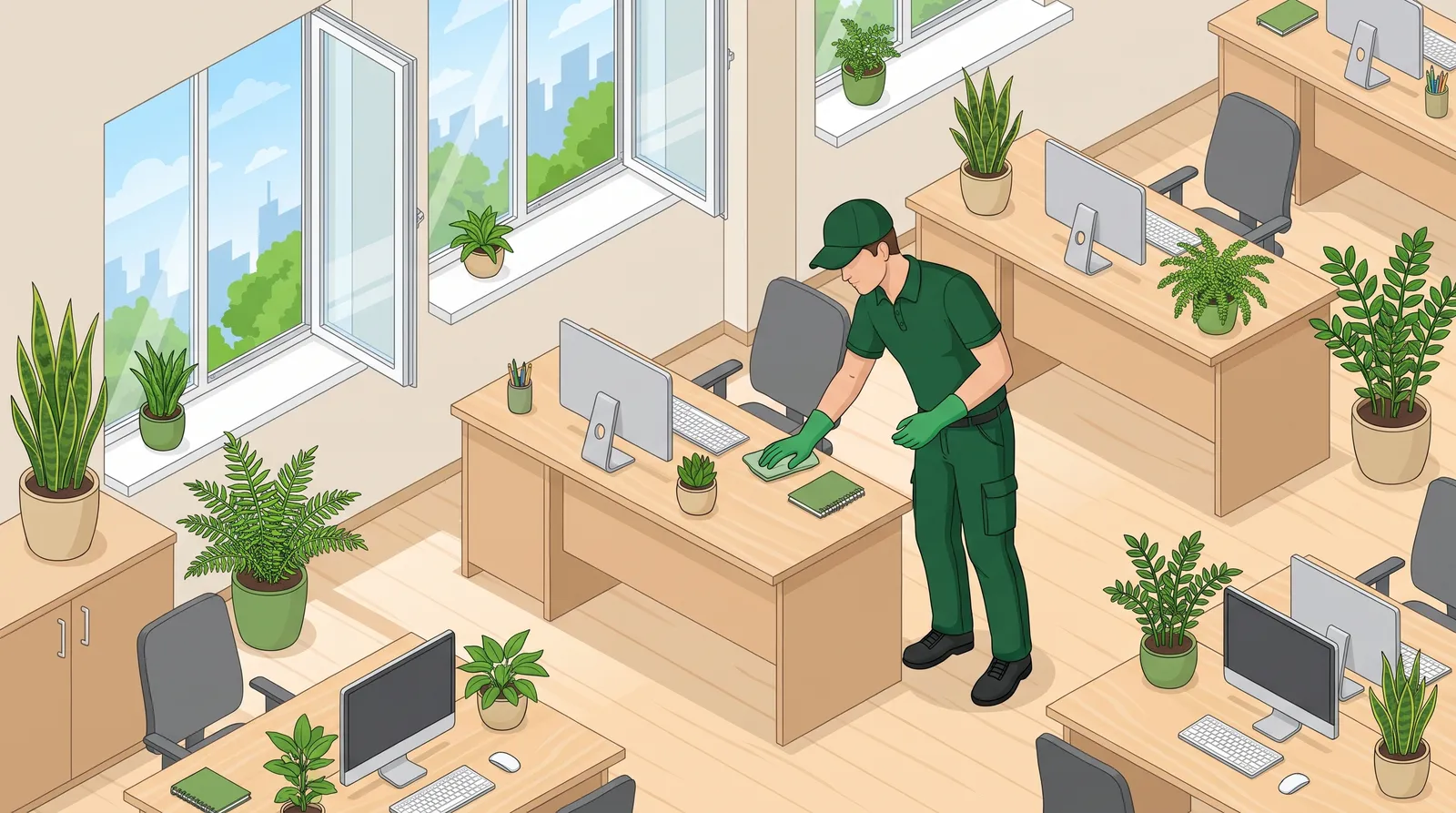
- A clean office won’t replace vaccinations, handwashing or staying home when ill, but it limits the spread of germs via shared surfaces.
- The most important are touch points: door handles, buttons, switches, handrails, the coffee machine, fridge, kitchen taps and worktops, and shared equipment.
- Disinfection only makes sense after a surface has been cleaned, and only with a product suitable for the material, used according to the instructions.
- During flu season, it is worth cleaning touch points more often, making sure rooms are aired and keeping washrooms well stocked.
- The scope and schedule of cleaning are best written into your contract with the cleaning company, with a separate list of touch points.
Office cleanliness and health – what it is really about
Anyone who has worked in an office in autumn and winter knows the scenario: one person comes in with a cold, and a week later half the department is sneezing. Respiratory infections spread mainly through droplets, but some germs can survive on surfaces for a while, get onto hands and then to the mouth, nose or eyes. In an office where many people touch the same door handles, lift buttons and fridge handles, that route matters.
So the topic of office cleanliness and health is not just about appearances. Regular cleaning of shared surfaces, working washrooms with soap and towels, a clean kitchen and good ventilation are elements of workplace hygiene that together reduce opportunities for infections to spread. They are not a miracle cure – they won’t replace vaccinations, handwashing or staying at home with a fever – but they are the part an employer has direct influence over.
In this article we don’t quote figures on sick leave or the number of bacteria on keyboards, because the results of such studies vary greatly depending on methodology. We focus on practice: what to clean, how and how often, to make the office a healthier place.
Touch points – the places that need the most attention
It is not the floors that need the most attention, but the places that many different people touch every day. In the industry they are called touch points or high-contact surfaces. They should go on a separate list in the cleaning schedule and be cleaned more often than the rest of the office.
- door handles and pulls, especially on entrance, toilet and meeting room doors
- lift buttons, access control panels, card readers
- light switches and remote controls for air conditioning or projectors
- stair handrails
- the coffee machine, kettle, fridge handle, microwave, kitchen taps
- taps, flush buttons, soap dispensers and towel dispensers in washrooms
- kitchen worktops and dining tables
- shared equipment: printers, photocopiers, conference phones
- hot desks – the desktop, keyboard, mouse, drawer handles
- tables and chairs in meeting rooms
Office disinfection – when it makes sense and when it doesn’t
Office disinfection is sometimes understood as spraying a whole room with a biocide. In everyday practice that is usually unnecessary. Regular cleaning of touch points matters far more, with disinfection as a supplement where the risk of germs spreading is highest.
The key rule is: clean first, then disinfect. A disinfectant applied to a greasy, dusty surface works less well, because the dirt acts as a protective layer for germs. So a door handle or worktop is first cleaned with detergent, and only then – if needed – wiped with a disinfectant.
The second rule is contact time. Every disinfectant has a time stated in its instructions for which the surface must stay wet for the product to work. A quick wipe followed immediately by drying often doesn’t meet this condition. It is also worth checking that the product is suitable for the material – some products dull plastic, damage screen coatings or discolour upholstery.
- use products intended for surface disinfection, applied according to the label
- observe the contact time given by the manufacturer
- don’t mix different chemicals
- wipe electronics with a cloth dampened with the product, never spray them directly
- make sure there is ventilation when working with chemicals
- keep safety data sheets for the products used
Flu season in the office – a plan for autumn and winter
Flu season in the office is a good time to review your cleaning schedule. You don’t need to change everything at once – a few targeted changes focused on shared areas and staff habits are enough.
First, how often touch points are cleaned. If door handles and buttons are normally cleaned once a day after working hours, during infection season you might consider an extra wipe during the day, for example at lunchtime, when the kitchen and washrooms are busiest. Second, supplies: soap, paper towels and hand sanitiser should always be available, not just “from one delivery to the next”. Empty dispensers are the easiest way to make sure nobody washes their hands.
Third, communication. A short note to the team that mugs are better washed in the dishwasher than rinsed under the tap, and that shared sweets are better split into separate bowls, costs very little. The most important thing, though, is a clear signal from the employer that someone with a fever should stay at home or work remotely if possible – no amount of cleaning will make up for a sick employee sitting at a desk next to others.
- extra cleaning of touch points during the day
- washrooms and kitchen always stocked with soap and paper towels
- hand sanitiser dispensers at the entrance and in the kitchen
- a dishwasher instead of rinsing mugs under the tap
- emptying washroom bins more often
- airing meeting rooms regularly between meetings
Kitchen and washrooms – areas of particular risk
In many offices the kitchen is also the dining room, a meeting place and a space nobody is formally in charge of. A fridge with forgotten food, a washing-up sponge in use for weeks, a cloth used to wipe everything in turn – these are typical sights. Sponges and cloths quickly become a breeding ground for bacteria, so paper towels and a dishwasher work better. The fridge should be emptied and cleaned at least once a week, with an agreed rule that unlabelled food is thrown out after a set day.
Washrooms need daily cleaning of toilets, washbasins and floors, as well as touch points: door handles, cubicle locks, taps and flush buttons. Pay attention to hand dryers and dispensers – if they are dirty, people start avoiding them and don’t dry their hands properly. A smell in the washroom is a sign that something is wrong with cleaning or ventilation, not a reason to add more air freshener.
Dust, carpets and air quality
How employees feel depends not only on what they touch, but also on what they breathe. Dust settling on shelves, windowsills, behind monitors and on ventilation grilles can worsen symptoms for allergy sufferers and cause a dry feeling in the nose and throat. Regular vacuuming with a good filter and wiping surfaces with a damp microfibre cloth collects dust instead of spreading it around.
Carpets trap dust and dirt, which is only an advantage if they are vacuumed systematically and washed from time to time. Extraction cleaning removes dirt from deep in the fibres where a vacuum cleaner can’t reach – we write more about it on the carpet cleaning page. Upholstered office chairs are worth cleaning at the same time as the carpet.
Ventilation can’t be forgotten either. Airing, a working mechanical ventilation system and regularly replaced air conditioning filters are the building manager’s responsibility, but they are directly linked to working comfort. A conference room with back-to-back meetings since the morning and no break for airing quickly becomes stuffy.
How often to clean the office to look after your team’s health
There is no single frequency that suits every office. The schedule for a small office with a few people looks different from an open space with hot desks and a large kitchen. The table below shows a typical split that you can adapt to the number of people, how the space is used and the time of year. We describe the detailed scope in our article scope of office cleaning.
| Area | Typical frequency | During infection season |
|---|---|---|
| Washrooms and toilets | Daily | Daily + an extra wipe of touch points during the day |
| Kitchen: worktops, sink, coffee machine, handles | Daily | Daily + at lunchtime |
| Door handles, buttons, switches, handrails | Daily | Several times a day in high-traffic areas |
| Desks (clear surfaces), shared equipment | Daily or several times a week | Daily; hot desks after each user |
| Hard floors and carpet vacuuming | Daily or several times a week | Unchanged, or more often at entrances |
| Fridge | Once a week | Once a week |
| Carpet and upholstery cleaning | Periodically | Before the autumn and winter season |
| Deep cleaning | Several times a year | A good time: before flu season |
What to agree with your cleaning company
If your office is cleaned by an outside company, it is worth taking employee health into account at the contract stage. A general clause like “office cleaning five times a week” says nothing about whether door handles and buttons are cleaned daily, or with what. It is better to write a separate list of touch points with frequencies, specify which products are used for cleaning and which for disinfection, and who is responsible for restocking soap and towels.
It is also worth asking how the crew organises its work: are cloths colour-coded (separate ones for washrooms, kitchens and desks), how often are they washed, are the buckets and mops for toilets kept separate from those for other rooms? These are basic rules of good practice that stop dirt being carried from the toilet to the worktops. You will find more tips in our guide how to choose a cleaning company.
A simple reporting channel also works well: one person on the company’s side and one on the office’s side who pass on feedback as it comes up. Office managers often say what they value most is being able to stop thinking about cleaning. One of our office clients wrote: “They’ve been cleaning our office for six months, three times a week. Always after hours and always thoroughly. At last we don’t have to think about it.”
Deep cleaning before the autumn and winter season
A good way to prepare your office for infection season is a one-off deep clean at the beginning of autumn. It covers places that routine cleaning skips or only wipes superficially: inside kitchen cupboards, the fridge and microwave inside, ventilation grilles within reach, light fittings, skirting boards, doors and frames, plus carpet and chair cleaning. After a clean like this, it is easier to maintain the standard on routine visits. We describe the service in detail on the deep office cleaning page.
Regular office cleaning in Warsaw – how we can help
MagCleaning has been cleaning offices in Warsaw and the surrounding area since 2022. We work under a contract with a schedule tailored to your office – in the evenings, at night or at weekends, without disturbing your staff – with a regular team and one contact person. We come with our own equipment and products, and on request we use the client’s products. We bill monthly by invoice, have third-party liability insurance, and offer businesses a trial clean.
Regular office cleaning costs from 2.50 zł/m² per month for daily cleaning Monday to Friday, and when you sign a contract you can get up to 20% off the first month. Prices are indicative – we give an exact quote after a free site visit. You will find more information on the office cleaning page, and you can check an indicative cost in our article how much does office cleaning cost.
Get your office ready for autumn and winter. Book a free site visit and a quote for regular cleaning – during working hours we will call you back within 15 minutes. Up to 20% off the first month when you sign a contract.
Office cleaning →Questions and answers
Does office cleanliness affect employee health?
How often should an office be disinfected?
Which places in an office are the dirtiest?
Does disinfection replace cleaning?
How do you prepare an office for flu season?
How much does regular office cleaning cost?
Quote in 1 minute
Choose your premises, answer a few questions and see an estimated price. No sign-up, no obligation.
- 01You answer a few questionsProperty type, floor area or rooms, frequency, date.
- 02You see an estimated priceStraight away on screen, no waiting for an email.
- 03We call back within 15 minutesWe arrange a site visit and send you a written offer.
Would you rather talk straight away? +48 881 331 880 · WhatsApp
Office cleaning scope – task list and schedule
“Office cleaning” means something different to every company. To avoid misunderstandings, it is worth breaking the scope down into specific …
How much does office cleaning cost in 2026? Prices per m² and examples
The monthly cost of a cleaning company depends mainly on floor area, visit frequency and scope of work. We show how we calculate the price o…
How to choose an office cleaning company – 10 questions worth asking
A good cleaning company is one you stop thinking about after a few weeks, because the office is simply clean. Before you get there, you have…
Describe your premises and we’ll work out the price
We call back within 15 minutes during working hours. Site visits and quotes for larger premises are free.